 how-to
How to Build Access Control for Facilities That Works
Last Updated: October 28, 2026
Quick Summary
Access control is the system that decides who can enter each area of a facility and when, protecting the building, its people and its assets. It creates a written rule for each door and a record of every entry. It also lets managers remove access quickly when staff or contractors leave.
- Access control limits entry to specific areas by role or schedule.
- It creates a log showing who entered and when.
- You can remove access in minutes rather than days.
- Reducing the need to rekey locks after staff changes saves effort.
- Build credential removal into the HR offboarding checklist so access ends on the last day.
Table of Contents
- Access Control System Types and How They Differ
- Writing a Facility Access Control Policy
- Physical Access Control Best Practices
- Visitor Management Security for Commercial Buildings
- Common Mistakes That Weaken Access Control
- Getting a Facility Security Assessment From Tactical Guard Services
- Frequently Asked Questions
Every facility has doors, and every door is a decision about who gets in. Access control is the system that makes those decisions, and it is one of the most practical ways to protect a building, its people and its assets. Tactical Guard Services provides professional security solutions designed to protect homes and businesses.
The importance of access control for facilities comes down to a simple question: who should be inside, and when? Without a clear answer, staff wander into restricted areas, former employees keep their keys, and contractors leave doors propped open. Access control can provide a written rule for each door and a record of its use.
The core idea is simple. Access control is the method for letting approved people in while keeping everyone else out.
- Limits entry to specific areas by role or schedule
- Creates a log of who entered and when
- Lets you remove access in minutes, not days
- Reduces the need to rekey locks after staff changes
Access Control System Types and How They Differ
Most facilities use one of a few main system types. Each one trades cost, convenience and security in a different way. The choice depends on how many people you manage, how often they move between sites, and how much risk the building carries.
Card and Keypad Systems
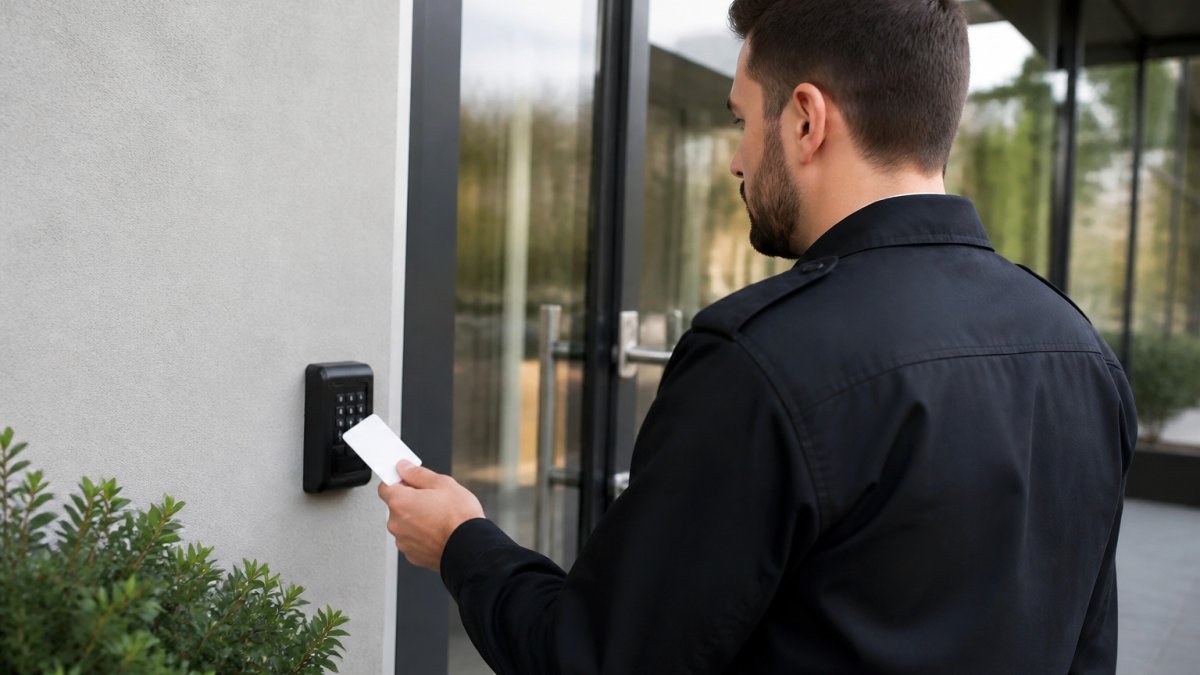
Card and keypad systems are one type of access control. Users tap a proximity card or enter a PIN to unlock a door. Cards can be lost, shared or copied, so a policy for reporting lost items can be useful.
Biometric and Mobile Credential Systems
Biometric systems read fingerprints or faces. Mobile credentials let users open doors with a phone. These options use biometric or mobile credentials. Check applicable rules before collecting biometric data.
Writing a Facility Access Control Policy
A system is only as good as the rules behind it. A written facility access control policy tells staff, vendors and visitors what is expected. It also gives your team a standard to follow when someone asks for an exception.
A strong policy usually covers:
- Who can receive credentials and who approves them
- Which areas each role can enter, and at what hours
- How lost or stolen credentials get reported and disabled
- How access is removed when someone leaves
- How often access lists get reviewed
Many facilities find that the offboarding step is where things break down. Build it into your HR checklist so access ends on the employee's last day, not weeks later.
Physical Access Control Best Practices
Good hardware and good policy still need daily habits to work. Physical access control best practices focus on closing the small gaps where unauthorized people slip through.
- Never prop open secured doors, even for a minute
- Require badges to be visible in restricted areas
- Test door hardware and alarms on a set schedule
- Review audit logs each week, not only after an incident
- Keep server rooms and utility areas on a separate, stricter access list
Watch out: Tailgating, where one person follows another through a door, defeats most card systems. Train staff to challenge anyone without a badge.
Contact us Today for a Quote →
The article lists common access control problems alongside their causes and fixes, which can be scanned quickly.
| Problem | Cause | Fix |
|---|---|---|
| Shared PIN codes | Not changed after staff turnover | Change codes when staff leave |
| Old contractor credentials | Still active months after a job ends | Remove access when the job ends |
| Ignored alarms | Alarms go off too often | Tune alarms so staff respond |
| Unread logs | Reviewed only after an incident | Review audit logs each week |
| Doors left open | Deliveries or maintenance | Keep secured doors closed |
Visitor Management Security for Commercial Buildings
Visitors create a constant risk because they arrive without credentials and leave the building after a short stay. Visitor management security for commercial buildings closes that gap with a clear sign-in process.

A simple process looks like this:
- Check visitor identification at the front desk
- Record name, company, host and time in and out
- Issue a temporary badge that shows the visitor's access area
- Escort visitors into any restricted zone
- Collect badges and close the record at departure
Image: A security officer at a lobby reception desk checking a visitor's ID badge in a modern office building.
Common Mistakes That Weaken Access Control
Most access control failures come from habits, not hardware. Watch for these problems:
- Shared PIN codes that nobody changes after staff turnover
- Old contractor credentials still active months after a job ends
- Alarms that go off so often that staff ignore them
- Logs that nobody reads until something goes wrong
- Doors left open during deliveries or maintenance
Fixing these mistakes costs far less than responding to a break-in.
Getting a Facility Security Assessment From Tactical Guard Services
Every facility is different. A professional assessment can help identify questions to consider about current access control. Contact Tactical Guard Services for information about its security services.
For current pricing, contact Tactical Guard Services for a quote.
Frequently Asked Questions
Why is access control important for facilities?
Access control is a way to manage who can enter a facility, which areas they can reach, and when. A facility's access arrangements and policies can vary. For facilities such as data centers, energy plants and retail stores with high traffic, access policies are one consideration in managing entry.
What should a facility access control policy include?
A facility access control policy should name who is authorized to receive access, which zones each group can enter, how credentials are issued and revoked, and how visitors are escorted. It should define review intervals for permissions, the procedure for lost badges, and who approves exceptions. Keep the policy short enough that staff will read it, and assign one owner who answers for updates and enforcement.
How often should facility access permissions be reviewed?
Facilities can set access-permission review intervals and credential-revocation procedures based on their needs.
What are the main types of access control systems?
Access-control systems can include keycard and keypad systems, biometric systems, and mobile credentials. The features and suitability of a system depend on the facility and the system selected.