 how-to
Hiring Security Guards for Events: A 2026 Guide
Table of Contents
- Assess Your Event Security Needs
- How Many Security Guards for an Event
- Vet and Select Professional Security Providers
- Event Security Guard Cost and Budgeting
- Create an Event Security Plan Template
- Event Security Checklist for Deployment Day
- Common Mistakes to Avoid When Hiring Event Security
- Frequently Asked Questions
Last Updated: October 21, 2026
Assess Your Event Security Needs
Hiring security guards for events starts with knowing what you're protecting.
Organizers often underestimate requirements by focusing only on headcount.
Walk every attendee space and identify chokepoints, emergency exits, and limited sightlines so guards cover critical zones without gaps.
Count capacity and expected attendance, and confirm whether the event is indoor, outdoor, or mixed.
Then identify risk factors: VIP attendees, ticketed versus public access, alcohol service, political sensitivity, valuable merchandise.
Evaluate venue size and attendee count
Venue dimensions determine guard positioning and sightline coverage. A 10,000-square-foot ballroom with one entrance requires different staffing than a 10,000-square-foot outdoor festival with four entry points.
Measure your space honestly, including parking areas, loading docks, bathrooms, and restricted zones.
Expected attendance affects guard-to-attendee ratios, entry point count, and crowd density. A 200-person event where everyone arrives within 30 minutes creates different crowd management challenges than one spread across four hours.
Identify risk factors and security threats
Risk factors determine whether you need basic access control or comprehensive incident response. Ask:
- Is this a ticketed or invitation-only event, or open to the public?
- Will attendees consume alcohol?
- Are there high-value items, merchandise, or equipment on-site?
- Will media or press be present?
Each "yes" increases complexity. A corporate holiday party with basic screening differs fundamentally from a concert with merchandise sales and alcohol service.
How Many Security Guards for an Event
"How many security guards do I need?" has no single answer. It depends on your venue, attendee count, risk profile, and specific security duties.
Most organizers hire too few guards and create safety gaps, or too many and waste budget. The right number covers your actual risks, not every hypothetical scenario.
Guard-to-attendee ratios by event type
Industry guidelines suggest different ratios based on event type and risk level:
- Low-risk corporate events (conferences, galas): 1 guard per 50-75 attendees
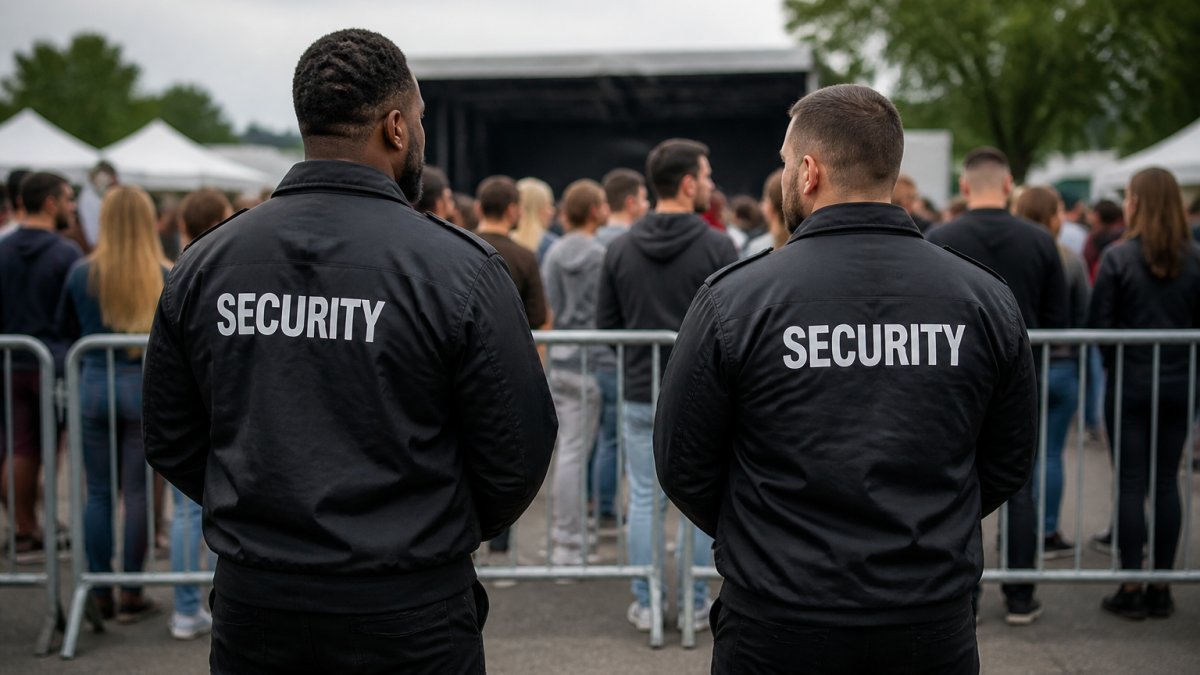
- Moderate-risk events (festivals, concerts): 1 guard per 25-40 attendees
- High-risk events (VIP gatherings, events with alcohol service): 1 guard per 15-25 attendees
- Very high-risk events (celebrity appearances, politically sensitive gatherings): 1 guard per 10-15 attendees
These are starting points, not formulas. A 200-person gala doesn't automatically need 3 guards. A 200-person outdoor festival with multiple entry points and merchandise might need 8.
What matters more than the ratio is coverage of critical functions: entry points, patrol zones, restricted areas, and incident response. Five entry points staffed by two guards is a security gap regardless of attendee count.
Calculating coverage for entry points and patrol zones
Start with entry points. Count every way someone can enter: front doors, side entrances, loading docks, parking areas.
Next, identify patrol zones.
Then factor in restricted areas. VIP lounges, merchandise storage, equipment rooms, and backstage areas need a dedicated guard or regular monitoring by roaming guards.
A practical example: a 300-person outdoor festival in a 15,000-square-foot space with three entry points, a merchandise booth, and a VIP area might need:
- 2 guards at entry points during peak arrival
- 2 roaming guards covering main festival area
- 1 guard at merchandise/restricted area
- 1 guard positioned for incident response
That's 6 guards total for a 300-person event, roughly 1 guard per 50 attendees, but calculated by actual coverage needs rather than a simple ratio.
Vet and Select Professional Security Providers
Not all security providers are equal. Some hire anyone with minimal training; others maintain rigorous standards and invest in professional development.
When hiring security guards for events, you're trusting attendees' safety to people you've never met. Verify at every step.
Check licensing and training credentials
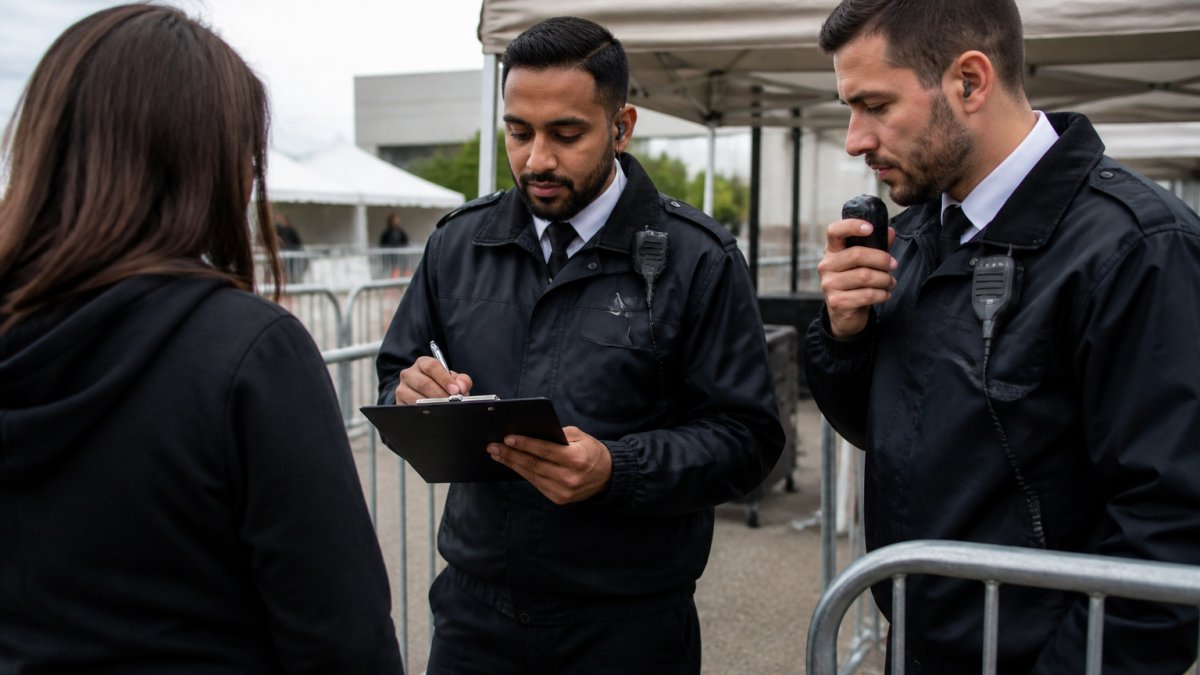
Start with licensing. Every professional security guard should hold a state security license, which varies by state but is non-negotiable.
Ask for proof of licensing for every guard proposed. Don't accept "they're all licensed", request documentation.
Beyond licensing, ask about training specifics:
- How many hours of annual training do guards complete?
- What specific training have they completed for event security (access control, crowd management, incident response)?
- Do they train on communication protocols and radio procedures?
- Have they received first aid and CPR certification?
Guards with 40 hours of annual training perform differently than those with 8, the difference shows on event day.
Ask whether the provider conducts background checks beyond state licensing. A thorough check catches issues licensing alone might miss.
Request references and verify past event experience
Ask for references from three to five recent events similar to yours, and ask specific questions:
- Did the guards arrive on time and prepared?
- How did they handle crowd management during peak times?
- Were communication and coordination between guards effective?
- Did they respond appropriately to any incidents?
References reveal how a provider performs under pressure, not how they describe themselves in a sales call.
Beyond references, ask about experience with your specific event type. A provider with extensive concert experience might not suit a corporate gala, their training, positioning, and response protocols are optimized for different scenarios.
Ask whether they've worked at your venue before. Guards who know the layout, emergency exits, and security systems will be more effective than those seeing it for the first time.
Event Security Guard Cost and Budgeting
Security is a line item in your event budget, but it's not a commodity purchase. The cheapest option often means the lowest training, experience, and reliability.
Understanding what drives security costs helps you make informed decisions about where to invest.
Contact us Today for a Quote →
Factors affecting hourly rates and total pricing
Several factors determine what you'll pay for event security guard services:
Guard experience level. Entry-level guards cost less than experienced professionals, who have handled more situations and require less supervision.
Timing and day of week. Weekend and evening events typically cost more than daytime weekday events.
Location and travel time. If guards need to travel significant distances, some providers charge travel fees or higher rates.
Number of guards. Hiring more guards often brings a slightly lower per-guard rate due to volume, but the total cost rises.
Pricing depends on quantity, dates, and your specific security needs.
Understanding overtime and shift premiums
Most security providers charge standard rates for regular shifts (typically 4-8 hours during business hours). Rates increase for:
- Evening and night shifts. Guards working after 6 PM typically cost 10-25% more.
- Overnight shifts. Midnight to 6 AM shifts command significant premiums.
- Weekend rates. Saturday and Sunday typically cost 15-30% more than weekday rates.
- Holiday rates. Major holidays often cost 25-50% more.
Understanding these premiums helps you budget accurately. A 12-hour event on Saturday evening will cost significantly more than a 12-hour event on Tuesday afternoon, not because the guards are different, but because of when they're working.
Ask providers for their full rate card before committing. Confirm what's included in the base rate and what triggers additional charges.
Create an Event Security Plan Template
A security plan converts your needs assessment into actual deployment. It's the document that tells every guard what they're doing, where they're positioned, and how to handle situations.
You don't need a 50-page document. A clear, concise plan that fits on 2-3 pages works better because guards will actually read it.
Guard roles and post assignments
Define each guard's specific role and assignment. Generic "security guard" doesn't work. Specific assignments do.
Your plan should specify:
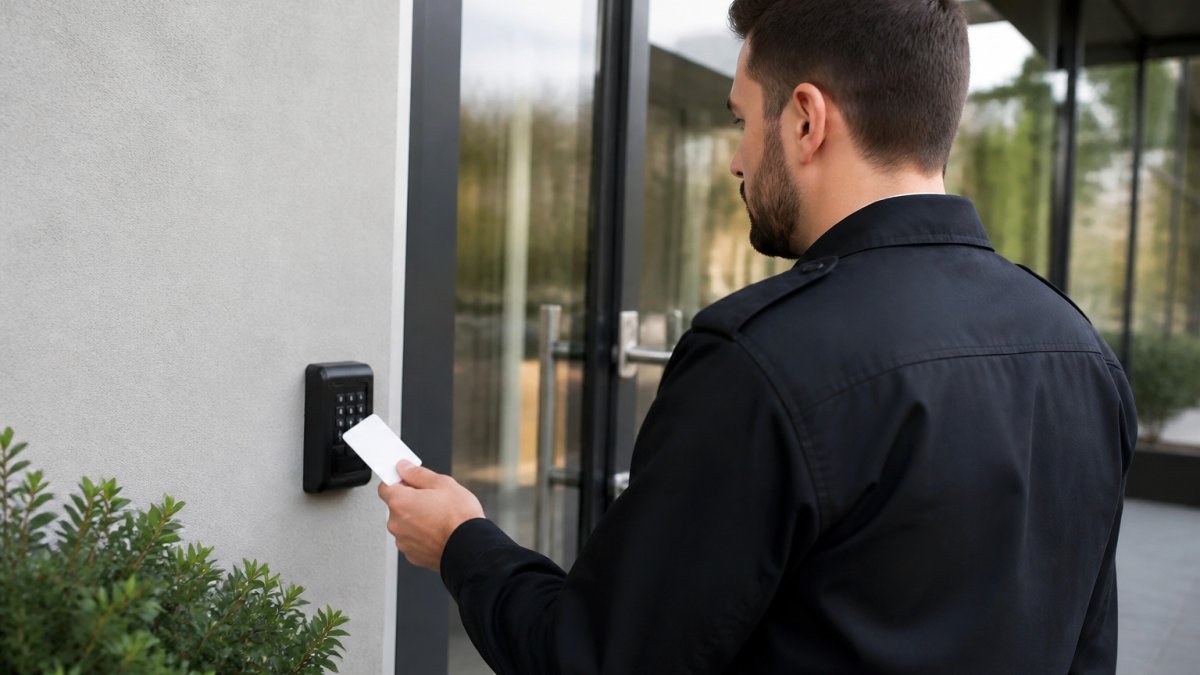
- Entry control guards. Which entry points they monitor, whether they check credentials or tickets, how to handle denied entry
- Roaming patrol guards. Which zones they cover, how frequently they patrol, what to look for
- Restricted area guards. Which areas they protect, who has authorized access, how to verify authorization
- Incident response guard. Where they position themselves, what incidents trigger their response, who they coordinate with
Include a simple diagram or map showing guard positions. A visual reference prevents confusion on event day.
Specify when each guard is on duty. If you have peak arrival times with extra guards, make that explicit.
Communication protocols and incident response
Establish clear communication procedures before the event:
- Radio check-in schedule. How often guards radio in (typically every 15-30 minutes)
- Code words or signals. Simple codes for common situations (Code 1 for minor incident, Code 2 for serious incident, etc.)
- Escalation procedure. Who do guards contact for different types of situations?
- Emergency response. How do guards summon emergency services? Who coordinates with police or medical responders?
Include contact information for key people: event organizer, venue manager, security supervisor, emergency services.
Test your communication system before the event. Have guards do a radio check-in and verify everyone can hear clearly. Nothing fails faster than a communication breakdown under pressure.
Event Security Checklist for Deployment Day
The day of your event, you need a checklist that ensures nothing gets missed. This checklist runs from hours before the event through after-event wrap-up.
Pre-event briefing and guard preparation
4-6 hours before event start:
- Verify all guards have arrived and are in uniform
- Conduct a complete briefing covering: event schedule, expected attendance, any VIPs or special guests, specific risks or concerns, weather conditions
- Review the security plan and guard positions
- Walk guards through the venue, showing them their assigned zones, emergency exits, and restricted areas
- Test all communication equipment and verify radio coverage throughout the venue
30 minutes before event start:
- Final radio check-in with all guards
- Verify all entry points are staffed and ready
- Confirm guest screening procedures are in place
- Brief any venue staff on their role in security procedures
Access control, guest screening, and crowd management
During event:
- Entry control guards verify credentials and manage arrival flow
- Roaming guards monitor crowd density and watch for concerning behavior
- Restricted area guards maintain access control to protected zones
- All guards maintain regular radio communication
- Incident response guard remains positioned to handle situations quickly
Crowd management specifics:
- Monitor entry point congestion, add staff if needed
- Watch for intoxicated attendees who might become disruptive
- Identify and monitor any aggressive or concerning behavior early
- Maintain clear pathways to emergency exits
- Be visible and approachable, attendees should know security is present
After event:
- Conduct final walkthrough to confirm all attendees have left
- Secure restricted areas and any valuable items
- Debrief with security team about any incidents or concerns
- Document any incidents that occurred
- Verify all communication equipment is returned and accounted for
Common Mistakes to Avoid When Hiring Event Security
Most event organizers make predictable mistakes that undermine security effectiveness. Recognizing these patterns helps you avoid them.
Ignoring communication failures. If guards can't reach each other via radio, your security plan falls apart.
Hiring insufficient coverage. Skimping on guard count to save money creates gaps.
Not having an incident response plan. If something happens, what's the procedure? Who calls emergency services?
Hiring security guards for events requires planning, verification, and clear communication. When you're ready to discuss your specific security needs and get a professional assessment of what your event actually requires, contact Tactical Guard Services today for a quote.
Frequently Asked Questions
How do I know if a security guard is properly trained and licensed?
Ask prospective providers for proof of state licensing, background checks, and training certifications. Verify credentials directly with your state's licensing authority. Request references from recent events and ask specifically about their guards' experience with your event type. Professional security providers maintain detailed records of each guard's qualifications and will share them upon request.
How many security guards do I need for my event?
Guard-to-attendee ratios depend on event type, venue layout, and risk level. General guidelines: low-risk indoor events (1 guard per 75-100 attendees), moderate-risk outdoor events (1 per 50-75), high-risk or VIP events (1 per 25-50). Account for entry/exit points, parking areas, and perimeter patrol. A professional security provider will conduct a site assessment and recommend appropriate staffing.
What factors affect the cost of hiring event security guards?
Event security guard costs depend on guard count, shift length, event duration, time of day (evening/weekend premiums apply), specialized services (access control, crowd control), and location. Additional factors include overtime rates, equipment needs, and insurance requirements. Contact security providers for customized quotes based on your specific event details and security requirements.
What should an event security plan include?
A comprehensive event security plan should cover guard post assignments, entry/exit procedures, guest screening protocols, communication systems, crowd control measures, incident response procedures, emergency evacuation routes, and coordination with local law enforcement if needed. Include a pre-event briefing agenda and contingency plans for common incidents. Your security provider can help develop or refine your plan.